 Preval Health
Peer-Reviewed Evidence
Decades of trials point the same way.
Lowering LDL cholesterol (LDL-C) lowers the risk of heart attack and stroke. Across 26 statin trials, each 39 mg/dL (1 mmol/L) drop in LDL-C cut major cardiovascular events by about 22% (Cholesterol Treatment Trialists' Collaboration, Lancet, 2010). Every Preval treatment plan draws on trials and consensus statements like the ones below.
For the plain-language version, start with our guides on ApoB, Lp(a) and PCSK9 inhibitors, or browse all guides.
Foundational Evidence
Read the evidence yourself.
Lowering LDL with prescription medicine prevents heart attacks and strokes. Each study below appeared in a peer-reviewed journal.
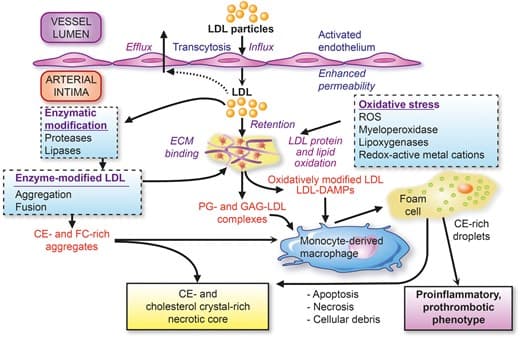
Low-density lipoproteins cause atherosclerotic cardiovascular disease: pathophysiological, genetic, and therapeutic insights
Borén J et al. · European Heart Journal (2020)
LDL is the principal driver of atherosclerosis. Treatments that reduce LDL-C lead to fewer cardiovascular events, and aggressive lowering stabilizes plaques by increasing collagen content and reducing lipid accumulation and inflammation.
This EAS Consensus Panel statement consolidates pathophysiological, genetic, and clinical trial evidence confirming that LDL particles cause atherosclerotic cardiovascular disease. The relationship is causal and dose-dependent. Lowering LDL-C with statins, ezetimibe, and PCSK9 inhibitors produces favorable plaque modifications. The panel also highlights the emerging role of other ApoB-containing lipoproteins, including Lp(a), in driving residual cardiovascular risk.
Read full paper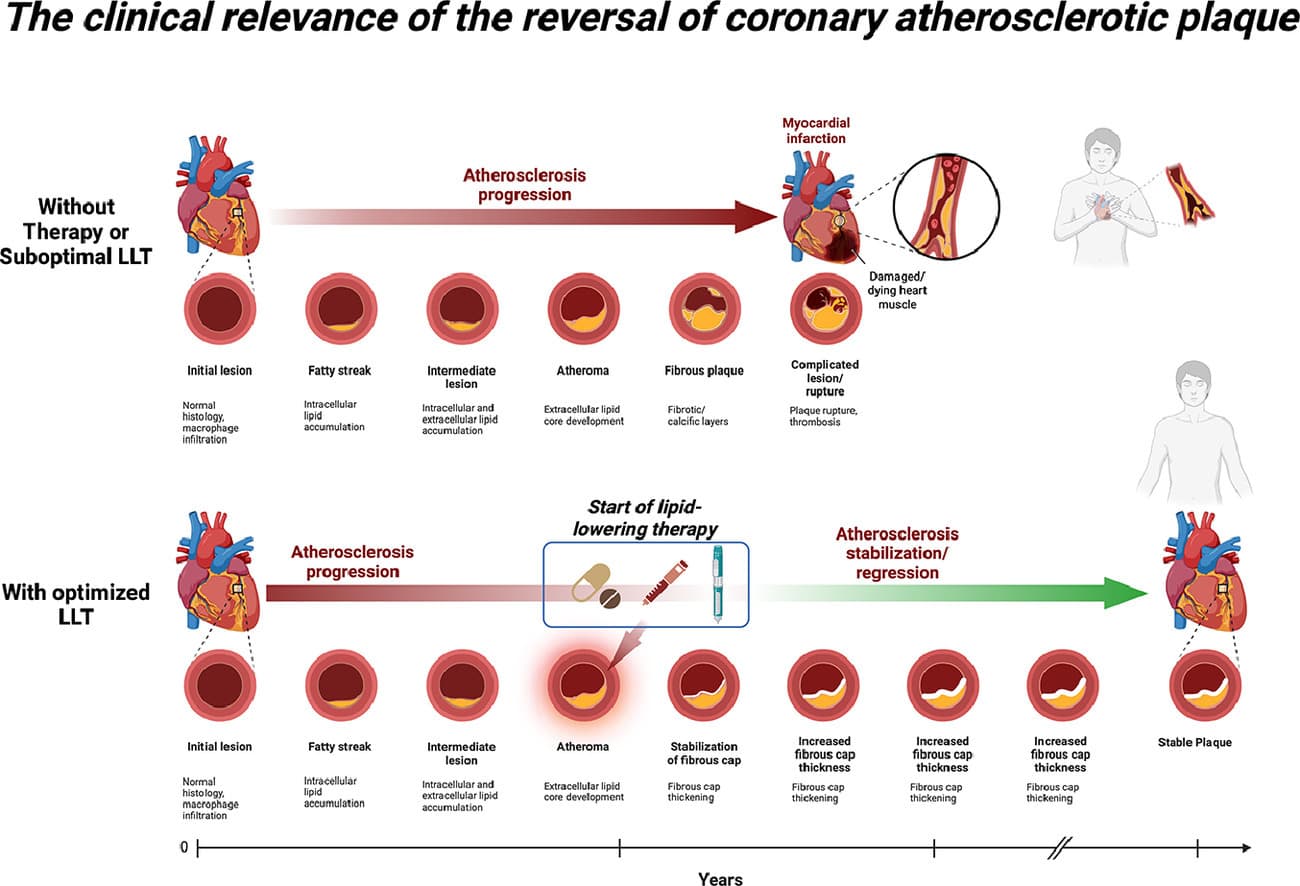
The Clinical Relevance of the Reversal of Coronary Atherosclerotic Plaque
Cesaro A et al. · European Journal of Internal Medicine (2024)
Intensive lipid-lowering therapy produces measurable plaque regression. Plaque volume shrinks and plaque composition improves. Plaque stabilization or regression links LDL-C reduction to fewer cardiovascular events.
This 2024 review consolidates evidence from IVUS, OCT, and NIRS imaging studies showing that aggressive LDL-C lowering with statins and PCSK9 inhibitors can physically reverse coronary plaque buildup. The top pathway shows what happens without treatment: plaque progresses from fatty streak to rupture and heart attack. The bottom pathway shows what happens with optimized lipid-lowering therapy: plaque stabilizes, the fibrous cap thickens, and progression halts. Imaging shows the link between lower LDL-C and fewer heart attacks.
Read full paper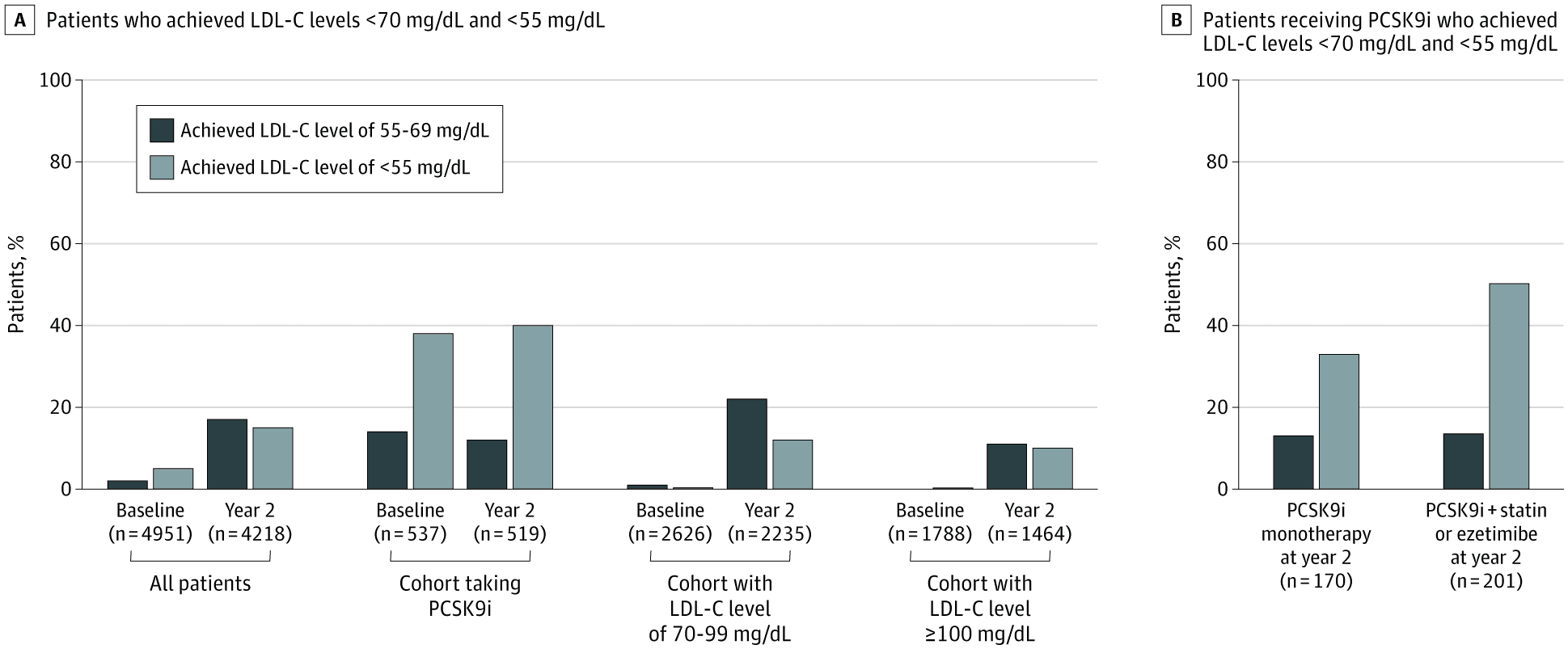
Use of Lipid-Lowering Therapies Over 2 Years in GOULD, a Registry of Patients With Atherosclerotic Cardiovascular Disease in the US
Cannon CP et al. · JAMA Cardiology (2021)
In 5,006 US patients with established heart or vascular disease, only 17% had their cholesterol treatment stepped up over 2 years, and two-thirds still had an LDL-C above 70 mg/dL.
The GOULD registry followed patients with atherosclerotic cardiovascular disease at US practices. At 2 years, 21% of those who started with an LDL-C of 100 mg/dL or more had reached an LDL-C below 70 mg/dL. Practices with lipid protocols stepped up treatment more often (22% vs 15%), and a structured protocol aims to close that gap.
Read full paper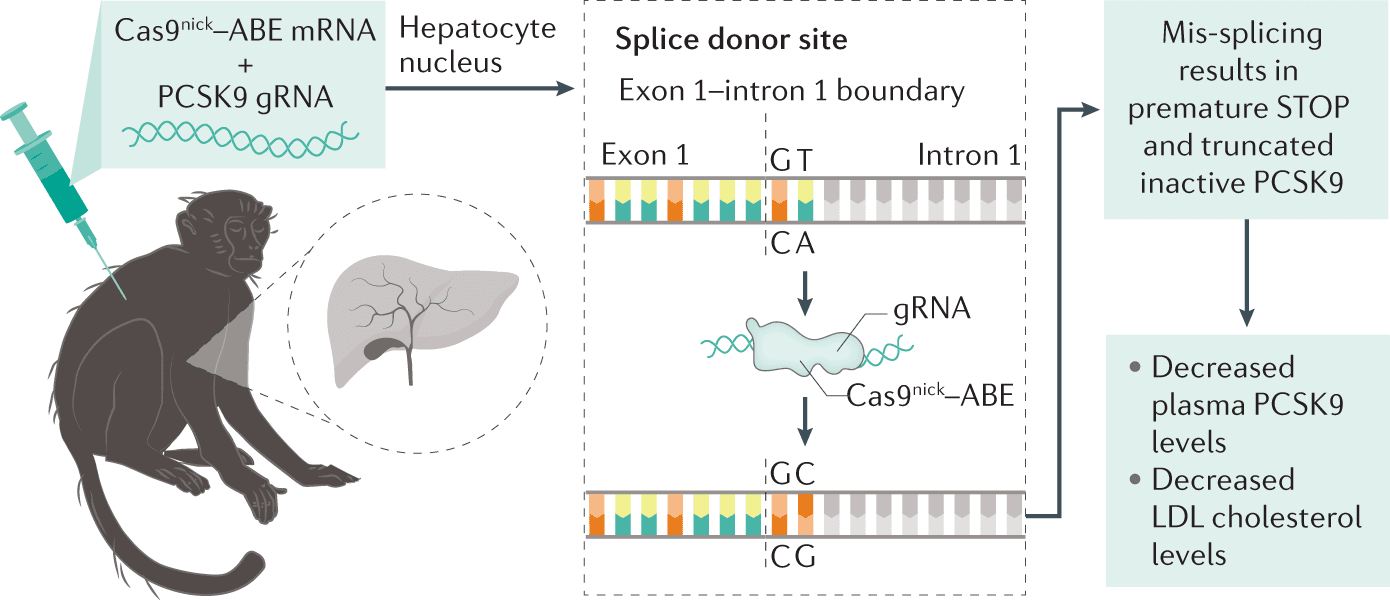
In vivo CRISPR base editing of PCSK9 durably lowers cholesterol in primates
Musunuru K et al. · Nature (2021)
A single infusion of adenine base editor targeting PCSK9 reduced LDL-C by ~60%, sustained over 8 months.
Using lipid nanoparticle-delivered adenine base editing in cynomolgus monkeys, a single infusion reduced circulating PCSK9 protein by approximately 90% and LDL-C by approximately 60%, with effects durably maintained for at least 8 months. This proof of concept from Verve Therapeutics suggests a one-time treatment could one day replace ongoing cholesterol medication.
Read full paperMajor FDA approvals, to scale
Cholesterol medicine, 1987 to now
5new options since 2015
1987
Lovastatin
The first statin
2002
Ezetimibe
Blocks cholesterol absorption
2015
Praluent and Repatha
The first PCSK9 inhibitors
2020
Bempedoic acid
A non-statin pill
2021
Inclisiran
Twice-yearly shot
2025
Lerochol
Once-monthly PCSK9 inhibitor
2026
Lipfendra
The first PCSK9 inhibitor pill
Therapeutic Pipeline
What's coming next.
Researchers are testing the next cardiovascular therapies in clinical trials now, from twice-yearly injections to one-time gene edits. Results often arrive before guidelines update.
Lepodisiran
A small interfering RNA that silences hepatic Lp(a) production. Lp(a) is a genetically determined, independent cardiovascular risk factor, and no approved therapy targets it yet.
Key Result
A single dose reduced Lp(a) by up to 96% from baseline, with reductions sustained for up to 48 weeks at the highest dose. The phase 3 ACCLAIM-Lp(a) outcomes trial is fully enrolled, with primary completion expected in 2029.
Muvalaplin
The first oral small-molecule inhibitor of Lp(a) assembly. It disrupts the apo(a)-apoB100 interaction and blocks Lp(a) particle formation.
Key Result
Reduced Lp(a) by up to 65% in an early trial, the first oral agent to meaningfully lower Lp(a). The phase 3 MOVE-Lp(a) outcomes trial began in 2025, with primary completion expected in 2031.
Inclisiran
A synthetic siRNA targeting PCSK9 mRNA in hepatocytes, delivered as a subcutaneous injection twice yearly. Already approved as Leqvio.
Key Result
Reduced LDL-C by approximately 50% versus placebo with just two injections per year in the ORION-10 and ORION-11 trials.
VERVE-102
A single-infusion gene editing therapy that permanently inactivates PCSK9 in the liver via adenine base editing delivered by lipid nanoparticles, intended as a one-time treatment.
Key Result
In interim Heart-2 data from 35 people, a single infusion lowered PCSK9 by up to 88% and LDL-C by up to 62%, lasting up to 18 months so far. Lilly plans a phase 2 study. An earlier version, VERVE-101, was paused in 2024.
Lilly, Heart-2 interim results · EAS Congress and NEJM (2026)
Pipeline therapies shown are based on published clinical trial data and may not yet be available for prescription. Preval Health's clinicians prescribe only FDA-approved medicines. We track these trials and update our protocols as new medicines are approved.
Get treated to the goals these trials support.
Preval covers advanced lipid testing, a PCSK9 inhibitor prescription when you need one, and cash pay so treatment starts without an insurance wait.
Join the Waitlist